

When we think about major health issues, our minds often go to common conditions like heart disease, diabetes, or cancer. But for millions of people and families, life is shaped by something far less visible: rare diseases. Individually uncommon but collectively widespread, rare diseases affect real people every day – and for many, organ donation can mean the difference between life and death [1][2].
What are Rare Diseases?
A disease is considered rare when it affects fewer than 200,000 people in the United States [1]. While that number sounds small, there are over 7,000 known rare diseases, and together they affect an estimated 25–30 million Americans – nearly 1 in 10 people [1][2].
Most rare diseases are:
- Genetic (often present at birth, though symptoms may appear later) [2]
- Chronic and progressive
- Difficult to diagnose, sometimes taking years to identify [3]
- Without a cure, requiring lifelong management
Examples include cystic fibrosis, inherited metabolic disorders, rare autoimmune diseases, and genetic conditions affecting the liver, kidneys, heart, or lungs [2]. Many of these illnesses eventually lead to organ failure, leaving transplantation as the only life-saving treatment option [4].
The Hidden Burden on Patients and Families
Living with a rare disease often means years of uncertainty. Studies show that many patients visit multiple healthcare providers before receiving an accurate diagnosis [3]. Even after diagnosis, treatment options may be limited, costly, or still under research.
Families often face:
- Frequent medical visits and hospital stays
- Emotional stress and isolation
- Financial strain from long-term care
- The reality that an organ transplant may be the only viable path forward [4]
Children are especially impacted. Pediatric patients make up a significant portion of transplant waiting lists, particularly for heart, liver, and lung transplants due to rare congenital and genetic conditions [5].
Why is Organ Donation So Critical?
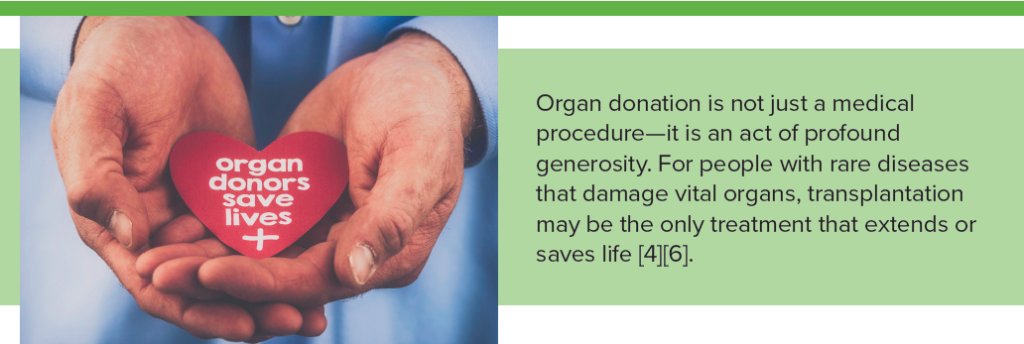
Organ donation is not just a medical procedure – it is an act of profound generosity. For people with rare diseases that damage vital organs, transplantation may be the only treatment that extends or saves life [4][6].
Organs commonly needed include:
- Kidneys (the most commonly transplanted organ)
- Livers
- Hearts
- Lungs
- Pancreas and intestines, often for rare metabolic or digestive disorders [6]
One organ donor can save up to eight lives and enhance many more through tissue donation [6].
The Reality of the Organ Shortage
Despite broad public support for organ donation, the number of available organs does not meet the growing need. Thousands of people in the U.S. remain on transplant waiting lists at any given time, and many wait years for a suitable match [6][7].
Important realities include:
• A person is added to the transplant waiting list approximately every 8 minutes [6]
• Many patients with rare diseases deteriorate quickly while waiting
• Living donation, particularly for kidneys and portions of the liver, can significantly reduce wait times and save lives [7]
For patients with rare diseases, timing is critical. Missing the transplant window can mean losing the chance for survival altogether [4].
The Ripple Effect of One Decision
Organ transplantation has far-reaching benefits beyond the recipient. Successful transplants can:
• Restore the ability to work, attend school, and participate in daily life
• Reduce long-term healthcare costs associated with chronic organ failure [7]
• Improve emotional and financial stability for families
• Strengthen communities through shared generosity
For individuals with rare diseases, a transplant may represent the first opportunity to experience improved quality of life – or life itself [4].
How You Can Make a Difference
You don’t need a medical background to help address this critical need:
- Register as an Organ Donor
Registration takes minutes and can save lives [6]. - Talk with your Family
Family understanding of your wishes is essential at the time of donation [6]. - Raise Awareness
Sharing accurate information about rare diseases and organ donation helps combat fear and misinformation. - Support Rare Disease Advocacy Groups
These organizations fund research, education, and patient support services [2]. - Consider Living Donation
Living donors provide life-saving organs to recipients in immediate need [7].
©2026ProgressiveHealth
References
1. National Institutes of Health (NIH) – Genetic and Rare Diseases Information Center (GARD). Rare Diseases Overview.
2. National Organization for Rare Disorders (NORD). Rare Disease Facts and Statistics.
3. EURORDIS. The Diagnostic Odyssey of Rare Disease Patients.
4. U.S. Department of Health & Human Services (HHS). Organ Transplantation and Rare Diseases.
5. Health Resources and Services Administration (HRSA). Pediatric Transplantation Data.
6. HRSA / Organ Procurement and Transplantation Network (OPTN). Organ Donation Statistics and Facts.
7. United Network for Organ Sharing (UNOS). Transplant Waiting List and Living Donation.
8. Donate Life America. Religious Views on Organ Donation.