
The leaves are beginning to change, temperatures are cooling—and suddenly you’re sneezing, congested and reaching for the tissues. Is it fall allergies, a common cold, or another respiratory illness?
It is not always easy to tell. Allergies and respiratory infections can share symptoms such as a runny or stuffy nose, sneezing and coughing. However, there are some important clues that can help you decide what may be going on—and when it is time to contact a healthcare professional.[1,3]
Why Do Allergies Get Worse in the Fall?
Spring may get most of the attention when it comes to allergies, but fall can be just as challenging.
Ragweed pollen is one of the biggest triggers of fall allergies. Ragweed typically begins releasing pollen in late summer, and symptoms can continue through September and October in many parts of the country.[2] Outdoor mold spores can also contribute to fall allergy symptoms.[7]
When someone with an allergy breathes in pollen or another allergen, the immune system reacts to something that is normally harmless. This reaction releases chemicals such as histamine, which can lead to sneezing, congestion, a runny nose and itchy or watery eyes.[1,2] Pollen can also make asthma symptoms worse in people whose asthma is triggered by environmental allergens.[1]
Signs That Point Toward Allergies
Think “itchy and repeatable.” Allergies are more likely when:
- Your eyes, nose or throat itch.
- Your eyes are watery or red.
- You experience repeated sneezing.
- Symptoms appear around the same time every year.
- Symptoms become worse after spending time outdoors.
- Symptoms improve when your exposure to pollen decreases.
- You do not have a fever, chills or significant body aches.[2,3]
If every September seems to bring the same itchy eyes, sneezing and congestion, seasonal allergies may be the culprit.
Signs That Point Toward a Cold—or Something Else
A common cold is caused by a virus, not an allergic reaction. More than 200 respiratory viruses can cause cold symptoms.[4]
Cold symptoms commonly include:
- Runny or stuffy nose
- Sneezing
- Sore throat
- Cough
- Headache
- Mild body aches
- Occasionally a low-grade fever
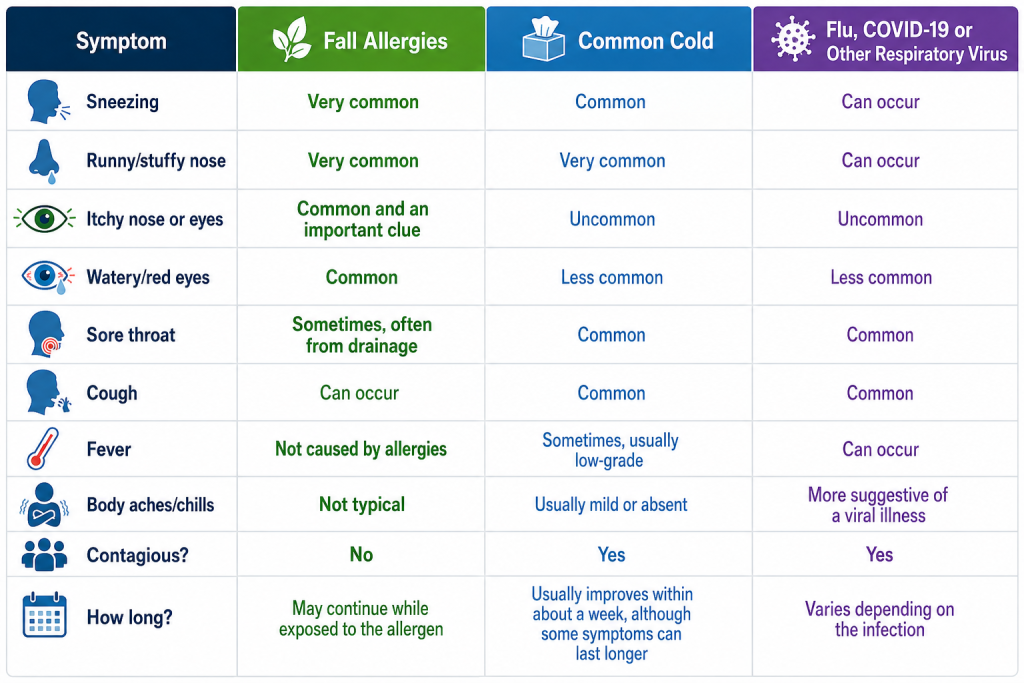
Cold symptoms often peak within the first two to three days. Most colds last less than a week, although congestion or cough can sometimes continue for 10 to 14 days while gradually improving.[4]
What about flu or COVID-19?
Symptoms such as fever, chills, significant fatigue, body aches or a worsening cough may suggest something other than allergies. Influenza and COVID-19 can also cause sore throat, congestion and a runny nose, so it may not be possible to tell what you have based on symptoms alone.[5,6]
Testing can help identify certain respiratory viruses, particularly if you have risk factors for severe illness. Treatments for flu and COVID-19 are available and generally work best when started early in the illness.[4,5]
6 Ways to Breathe Easier This Fall
If seasonal allergies are your problem, reducing your exposure to pollen can make a difference.
- Check pollen levels.
Pay attention to local pollen forecasts and consider limiting lengthy outdoor activities when pollen levels are especially high.[1] - Keep pollen outside.
When practical, keep windows closed during periods of high pollen and use air conditioning or appropriate filtration indoors.[1] - Change clothes after spending time outside.
Pollen can collect on your clothing. Changing after yard work, exercise or other prolonged outdoor activities can help keep pollen from spreading throughout your home.[1] - Shower after outdoor activities.
Washing your hair and skin can remove pollen that might otherwise end up on your furniture or bedding.[1] - Take allergy medicines as directed.
Antihistamines, certain nasal sprays and other treatments may help control allergic rhinitis. Some seasonal allergy medicines work best when treatment begins before symptoms become severe. Ask your healthcare provider or pharmacist which options are appropriate for you, particularly if you have other medical conditions or take other medications.[7] - Don’t ignore asthma symptoms.
Pollen can trigger asthma attacks in some people. If you have asthma, continue following your healthcare provider’s asthma treatment or action plan and pay attention to increasing wheezing, coughing or shortness of breath.[1]
©2026ProgressiveHealth
References
1.Centers for Disease Control and Prevention. Allergens and Pollen. Updated August 11, 2026.
2.American Academy of Allergy, Asthma & Immunology. Ragweed Allergy: Plants Packed with Pollen. Updated July 16, 2026.
3.National Institutes of Health, NIH News in Health. Cold, Flu, or Allergy? Symptom comparison and consumer health guidance.
4.Centers for Disease Control and Prevention. About Common Cold. Updated February 19, 2026.
5.Centers for Disease Control and Prevention. About Respiratory Illnesses. Symptoms, prevention and emergency warning signs.
6.Centers for Disease Control and Prevention. Multiplex Tests to Detect Influenza, SARS-CoV-2, and RSV. Updated April 27, 2026.
7.American Academy of Allergy, Asthma & Immunology. Hay Fever/Rhinitis: Symptoms, Diagnosis, Management & Treatment.