
As we spend more time outdoors — hiking, gardening, or simply enjoying warm weather — it’s important to be aware of the tiny creatures that can cause big problems: ticks. These small parasites can carry diseases that may affect your health if you’re not careful. Let’s take a simple look at what tick-borne illnesses are, how to prevent them, what symptoms to watch for, and what to do if you’re bitten.
What are tick-borne illnesses?
Tick-borne illnesses are diseases that are transmitted to humans through the bite of infected ticks. Some of the most common ones in the United States include:
- Lyme Disease
- Rocky Mountain Spotted Fever
- Anaplasmosis
- Babesiosis
- Ehrlichiosis
- Powassan Virus (less common but potentially serious)
Ticks pick up these germs by feeding on infected animals like mice or deer and can pass them to humans during a bite.
How to prevent tick bites?
Prevention is your best defense. Here’s how you can stay safe:
Dress smart: Wear long sleeves, long pants, and tuck pants into socks when walking in grassy, wooded, or brushy areas.
Use repellent: Apply insect repellent that contains 20% or more DEET, picaridin, or IR3535 on exposed skin and clothing.
Stay on trails: Avoid tall grass and overgrown areas. Stick to the center of trails.
Check yourself and pets: After spending time outdoors, thoroughly check your entire body (and your pets) for ticks.
Shower soon after being outdoors: Showering within two hours may reduce your risk of getting Lyme disease and can help wash off unattached ticks.
Tumble dry clothes: Put outdoor clothes in the dryer on high heat for 10 minutes to kill any ticks.
Symptoms to watch for?
Symptoms of tick-borne illnesses can vary but may include:
- Fever and chills
- Fatigue
- Headache
- Muscle or joint aches
- Swollen lymph nodes
- Rash (for example, a “bull’s-eye” rash with Lyme disease)
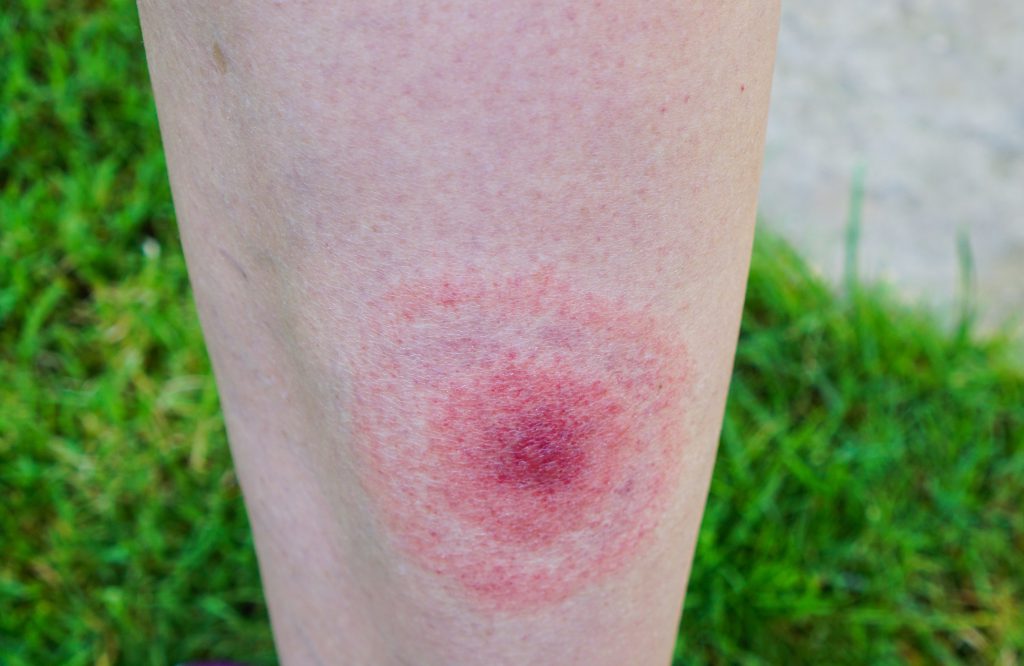
Erythema migrans is an expanding rash often seen in the early stage of Lyme disease, which is
caused by Borrelia burgdorferi. A similar rash can also occur in Southern Tick-Associated Rash
Illness (STARI), which is associated with bites from the Lone Star tick (Amblyomma americanum).
The rash can appear anywhere from 3 to 30 days after a tick bite..
These symptoms may appear anywhere from a few days to a few weeks after a bite. Early symptoms often feel like the flu, which is why many people don’t initially realize they’ve been infected.
First aid for tick bites
If you find a tick attached to your skin, here’s what to do:
Remove the tick promptly: Use fine-tipped tweezers to grasp the tick as close to the skin’s surface as possible.
Pull upward steadily: Avoid twisting or jerking, which can cause mouth-parts to break off and remain in the skin.
Clean the area: After removal, wash the bite area and your hands with soap and water or disinfect with rubbing alcohol.
Save the tick (optional): Place the tick in a sealed bag or container. This can help identify the type of tick if you develop symptoms later.
Do not use petroleum jelly, nail polish, or heat to remove the tick — these methods are not effective and may increase infection risk.
When to seek medical attention?
You should contact a healthcare provider if:
- You cannot completely remove the tick.
- You develop symptoms such as fever, rash, fatigue, or joint pain within several weeks of a bite.
- You suspect the tick was attached for more than 24 hours.
- You live in or visited an area where tick-borne diseases are common.
Early treatment — often with antibiotics — is highly effective in most tick-borne diseases when started quickly.
Enjoy your summer safely
With just a few simple precautions, you can enjoy all that summer has to offer while keeping your body healthy and your skin protected. Hydration and sun protection aren’t complicated, but they do require daily attention—especially when the heat is on!
Stay Informed, Stay Safe
With a little awareness and prevention, you can enjoy your time outdoors while minimizing your risk. If in doubt, it’s always better to consult a medical professional sooner rather than later.
References
- Centers for Disease Control and Prevention (CDC)
- Mayo Clinic; American Lyme Disease Foundation